 EN
EN
Why Automatic Profile Loading Cutting Line Implementation Eliminates Bottlenecks
The manual loading bottleneck: throughput loss, labor dependency, and scrap escalation
When materials are loaded manually, it really limits what cutting lines can accomplish because there are three main problems that work together. The whole process moves as fast as the person handling materials, which means saws often sit idle when switching between tasks, cutting overall efficiency down around 30%. Relying on workers creates another issue too many companies overlook. When employees call in sick, switch shifts, or just get tired, production drops off and quality becomes unpredictable. Perhaps the biggest problem though is how people position materials inconsistently, leading to alignment issues that send scrap rates soaring past 15%, according to checks done across multiple aluminum extrusion facilities. Switching to robotic bar feeders solves all these headaches by keeping materials moving nonstop without depending on any particular worker, so production speeds stay steady regardless of who happens to be operating things at any given moment.
ROI drivers: 37% faster changeover, 22% lower scrap, and 58% reduction in operator intervention (AluMotive 2024 Benchmark)
Bulk infeed automation brings real benefits in several key areas. The changeover process gets much faster too, around 37% quicker when the system synchronizes part destacking with the CNC controller instead of waiting for manual measurements and adjustments. We see about 22% less scrap because the machine checks metal quality, shape dimensions, and meets tolerances requirements using laser technology before actually making cuts. Operators spend way less time monitoring things now that smart systems handle part orientation, verify certifications, and sequence transfers automatically, cutting their involvement by nearly 60%. These results have been confirmed at over 27 major extrusion plants nationwide. Most companies report getting their investment back within about 14 months from reduced labor costs and better material usage efficiency.
Core Components of a Reliable Automatic Profile Loading Cutting Line
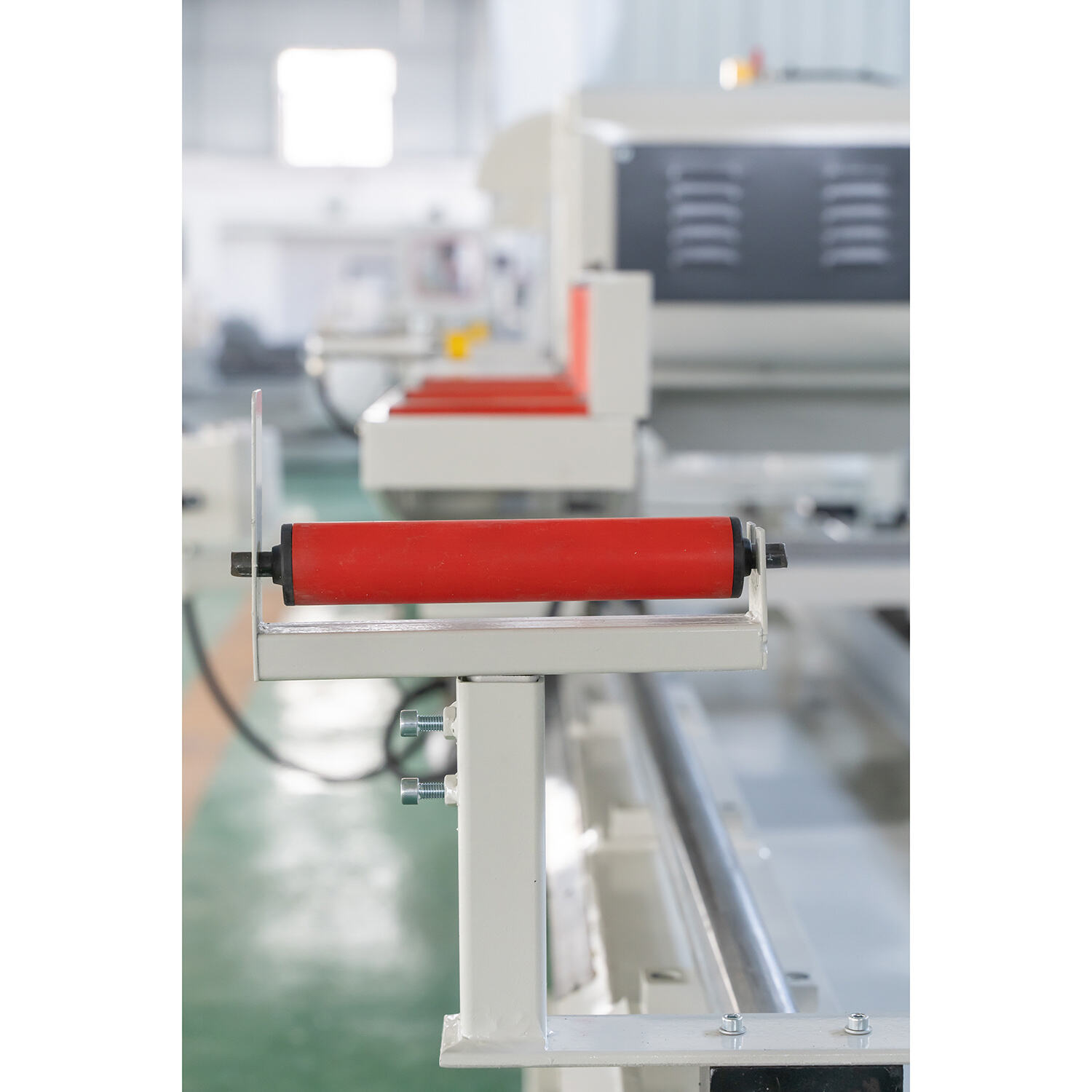
A robust automatic profile loading cutting line integrates three interdependent subsystems to eliminate manual handling while ensuring precision, flexibility, and compatibility across diverse aluminum profiles.
Destacking & orientation: servo-controlled vacuum lifters with adaptive gripper geometry
Vacuum lifters controlled by servos can tweak their movement and gripping strength to handle all sorts of odd shaped extrusions, whether they're delicate thermal breaks or hefty structural beams. The grippers are sealed with silicone and keep about 98% suction power even when dealing with surfaces that aren't perfectly smooth, like those with manufacturing marks or slight imperfections from handling. These systems can pick up items weighing as much as 80 kilograms. When combined with smart stacking software powered by artificial intelligence, they cut down on wasted movements compared to older fixed design systems. We've seen around a 45% improvement in efficiency in real world applications.
Identification & verification: vision-guided barcode/QR + laser profilometry for alloy, size, and tolerance validation
The multi-spectral vision systems work by scanning those QR codes and barcodes to get the official material information, and then they check this against what's actually measured in real time. Meanwhile, laser profilometers take a look at the cross section geometry with a resolution of about 200 micrometers. These devices spot problems like when someone accidentally uses 6063 instead of 6061 aluminum, or finds issues with wall thickness that don't meet specs, plus any twisting or bowing that goes beyond acceptable limits. Having this two step verification process stops bad materials from getting into the cutting stage altogether, which means we avoid creating scrap later on down the production line because something didn't match specifications. When bundles fail inspection, they just get set aside automatically while the rest of the production continues running smoothly without interruption.
Transfer & synchronization: servo-driven transfer rails with real-time CNC handshake via OPC UA
The closed loop servo transfer rails can position profiles within about 0.2mm repeatability, which matters a lot when making those tight tolerance cuts on complicated shapes. OPC UA allows communication faster than a second between the loading system and the CNC saw controller. This means we can adjust transfer speeds dynamically depending on what the machine is actually doing at any given moment. For instance, it will slow down during tool changes and pick up pace again when there's nothing else happening. The result? Saw waiting times drop around 68%. Materials keep flowing without interruption while still getting accurate cuts and keeping tools in good condition longer.
Integration Best Practices for Seamless CNC Saw Compatibility
There are four solid approaches that help make sure automatic profile loading works smoothly with CNC saws. Number one is sticking with OPC UA as the main communication protocol. This lets the system sync up the timing between when parts get loaded and how the saw moves around, which keeps things from crashing into each other or sitting idle waiting for nothing. Second step involves running dry runs through simulation software before actually installing anything physical. These virtual tests check if the grippers can reach where they need to go, make sure there's enough space for movement, and confirm the timing works out right. This cuts down on mistakes during actual setup by roughly 70%. Third, install those real-time feedback sensors like high res encoders and optical alignment systems. They double check where profiles sit at all times, keeping position accuracy tight within about 0.1mm. If something goes off track even slightly, the system pauses safely instead of just stopping completely. Lastly, grab hold of those modular programming templates already set up for most popular saw models and typical cutting specs. These templates speed up getting everything working together and make it easier to switch over to different machines or jobs later on without tearing apart the whole control system from scratch.
FAQ
What are the main benefits of implementing automatic profile loading cutting lines?
Implementing automatic profile loading cutting lines significantly reduces manual handling bottlenecks, improves throughput, reduces labor dependencies, and minimizes scrap rates by maintaining consistent material positioning.
How does automation impact changeover times and scrap rates?
Automation speeds up changeover processes by 37% and reduces scrap rates by 22% due to improved material checking and alignment.
What components are essential for a reliable automatic profile loading cutting line?
Key components include servo-controlled vacuum lifters for destacking and orientation, vision-guided barcode/QR systems for identification and verification, and servo-driven transfer rails for synchronization.
How can one ensure seamless integration with CNC saws?
Ensuring seamless integration involves using OPC UA communication protocols, conducting virtual tests, installing real-time feedback sensors, and employing modular programming templates.
Table of Contents
- Why Automatic Profile Loading Cutting Line Implementation Eliminates Bottlenecks
-
Core Components of a Reliable Automatic Profile Loading Cutting Line
- Destacking & orientation: servo-controlled vacuum lifters with adaptive gripper geometry
- Identification & verification: vision-guided barcode/QR + laser profilometry for alloy, size, and tolerance validation
- Transfer & synchronization: servo-driven transfer rails with real-time CNC handshake via OPC UA
- Integration Best Practices for Seamless CNC Saw Compatibility
- FAQ