 EN
EN
Why Mixed-Model Routing Demands a New Automation Paradigm
The SKU Explosion Challenge: How Rising Variant Complexity Breaks Fixed-Automation Routers
Old school routers just can't keep up with all the different products we see these days. Door and window makers have been dealing with way more variety in their stock keeping units since around 2020 according to Fabrication Trends Report data. The problem is that traditional fixed tooling setups need someone to manually adjust everything whenever there's a new model coming through the line. On average this takes about 47 minutes every time they switch models. Machines that are too rigid simply don't adapt well when product variants keep changing so often, which leads to roughly 18 percent downtime while switching between different items. Because of this lack of flexibility, factories end up producing in big batches instead of small runs. That approach pushes inventory costs sky high, adding around seven hundred forty thousand dollars extra each year as noted in Ponemon's 2023 findings. At the heart of it all lies a fundamental issue: most systems struggle with handling mixed model production where things like lock hole sizes, angles cut, and depth measurements differ from one unit to another. Older equipment still sees variation as something wrong rather than part of normal design specifications.
Redefining Flexibility: Reconfigurable Automation, Not Manual Workarounds
Trying to fill tech gaps just by wrenching things together or rewriting code doesn't cut it anymore. Real flexible automation comes down to having equipment that actually expects changes before they happen instead of scrambling after the fact. Take a look at what's available today – systems built with modular parts such as those ISO 10791-6 compliant quick swap chucks we all know about, plus vision guided alignment tools. With these setups, switching between different models takes less than nine minutes without sacrificing that crucial 0.1mm accuracy. Fixtures that can sense the shape of the workpiece on their own are becoming standard now. And those edge AI controllers? They tweak feed rates and drill paths automatically during production runs. This cuts down on wasted time when changing setups and turns what used to be expensive headaches into something manufacturers can actually leverage as an advantage over competitors.
Smart Hardware Enablers for Rapid Model Changeover
Modular Tooling Systems: Cutting Lock Hole Router Changeover from 47 to 9 Minutes
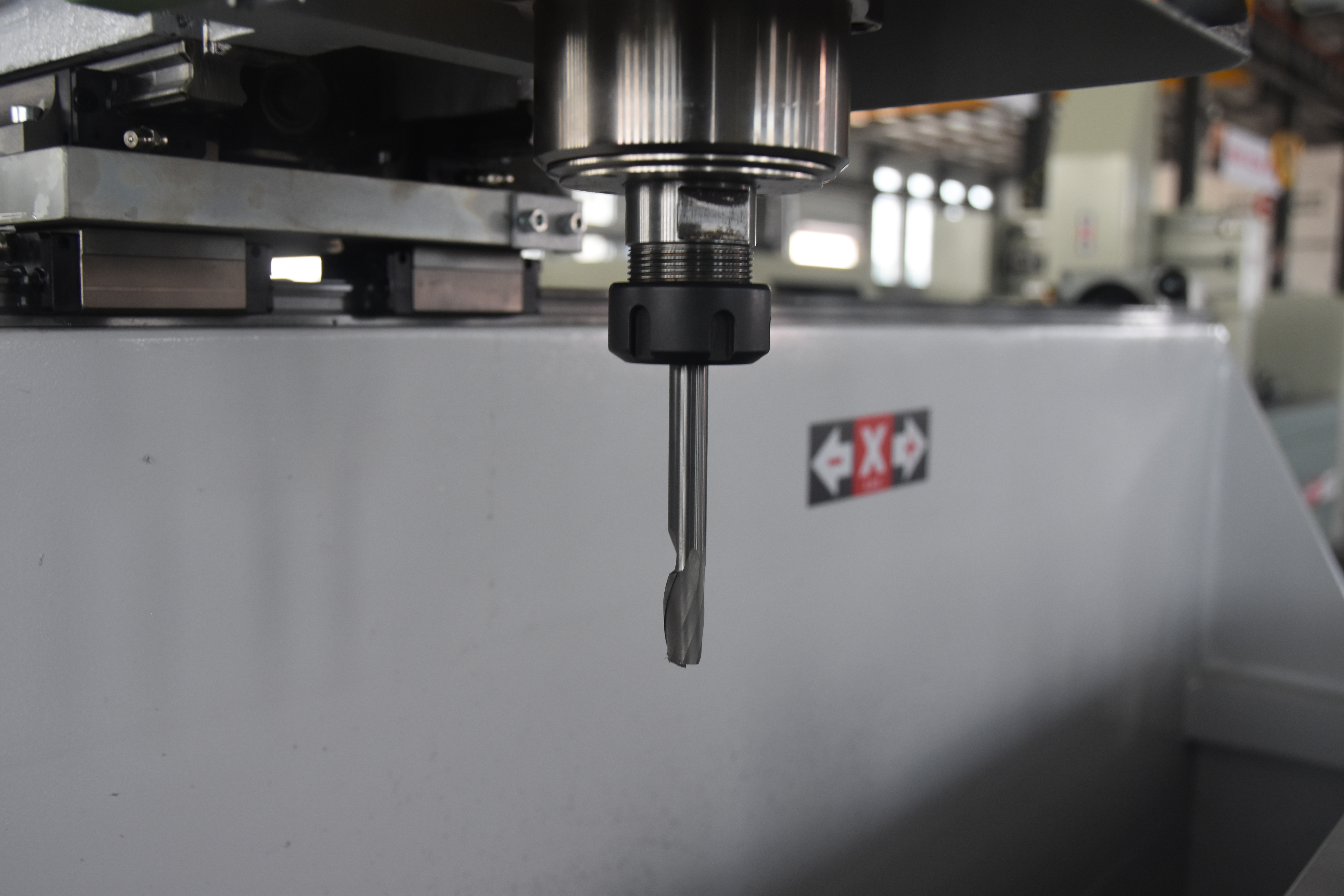
Modular tooling setups give manufacturers much needed flexibility when dealing with different product models. Instead of spending hours manually adjusting equipment, these systems use standard connections that don't require special tools. Traditional methods can take around 47 minutes just to switch between different lock variants because workers have to do all sorts of recalibrations and check alignments by hand. Newer systems solve this problem with pre-set positions and those handy snap-on connectors we've all seen on modern machinery. The result? Changeover times drop below 9 minutes, which cuts down on wasted time during production runs. That's about an 80% improvement in efficiency while still keeping the same level of accuracy most factories need. Plus, since operators aren't handling the tools as much anymore, there's less wear and tear on equipment and fewer mistakes made during setup. What used to be frustrating downtime now becomes actual productive work time instead.
Vision-Guided Calibration and ISO 10791-6 Compliance in Multi-Variant Routing
Vision systems have pretty much done away with those tedious manual measurements when dealing with multiple variants of lock hole routing. The cameras basically scan the reference points on fixtures and the actual geometry of the workpieces, then automatically adjust the router paths right before any machining starts up. This whole process keeps everything in line with ISO 10791-6 standards regarding where things need to be positioned and how consistently the feed rates should run across different model types. If there's even a tiny deviation past that 0.005mm threshold, the system kicks in with automatic corrections so holes stay at consistent depths regardless of what kind of material is being worked on. When manufacturers build quality checks right into their changeover processes, they end up avoiding those frustrating issues like misaligned strikes or mismatched threads that plague manual setup methods. And as an added bonus, this approach typically cuts down on inspection time by around two thirds compared to traditional approaches.
Intelligent Control Architecture for Batch-of-One to Small-Batch Routing
Edge-AI + PLC Hybrid Sequencing: Real-Time Adjustment of Feed Rate, Depth, and Tool Path per Lock Variant
Mixed model routing has really broken through the constraints of traditional fixed automation thanks to a clever combination of technologies. At its core is Edge-AI sitting on top of those old reliable Programmable Logic Controllers we all know as PLCs. What makes this setup work so well? The Edge component handles live sensor data from things like machine vibrations, temperature changes, and differences in material density. It then adjusts machining parameters on the fly. The PLC part takes care of the nitty gritty motion control stuff like setting spindle speeds, controlling how fast materials get fed into machines, and determining exactly how deep each hole should be drilled. This two tier system lets manufacturers switch production parameters automatically between different lock variants, even when running just one unit at a time, without needing anyone to manually adjust settings. Before actual machining happens, these systems check proposed tool paths against digital twin simulations to avoid any dangerous collisions and keep within those strict ISO 10791-6 tolerance requirements during equipment changes. Some pretty impressive research shows that these distributed control systems based on coalition models can boost Overall Equipment Effectiveness by anywhere from 14 to 22 percent in small batch manufacturing simply by cutting down on idle time between operations. This finding came out in the IEEE Transactions back in 2021.
Digital Twin—Driven Sequencing to Minimize Setup Loss in Mixed-Model Runs
Validating Optimal Model Sequences Virtually Before Physical Execution
When switching between different models on production lines, setup losses often take up around 15 to 30 percent of total production time. Digital twin technology tackles this problem head on by running simulations of hundreds if not thousands of possible lock variations in a virtual setting first. The system looks at everything from how tools move through their paths to where they need to clamp down and what speed materials should be fed at. Based on all these factors, it figures out which sequence works best when actually running on the factory floor. Real world tests have shown this approach cuts setup times by roughly 40%. What makes this so valuable is that it removes the guesswork normally involved in making adjustments. It also keeps robotic tool changers in sync with conveyor belts as they index along the line. Plus, it helps meet those strict ISO 10791-6 standards regarding dimensional accuracy across different product variants. For manufacturers wanting flexible automation systems, being able to test out batch sequences digitally means avoiding expensive stoppages whenever moving from one customized configuration to another.
FAQ
What is mixed-model routing?
Mixed-model routing involves manufacturing processes that must accommodate varying product designs, requiring systems to adapt quickly to different specifications like lock hole sizes and cutting angles.
Why are traditional fixed-automation systems inadequate for mixed-model routing?
Traditional systems lack flexibility and require significant manual effort to adapt to new product variants, causing downtime and increased inventory costs.
How do modular tooling systems benefit manufacturing?
Modular tooling systems significantly reduce changeover times by utilizing standard connections and pre-set positions, enhancing efficiency and reducing equipment wear.