 EN
EN

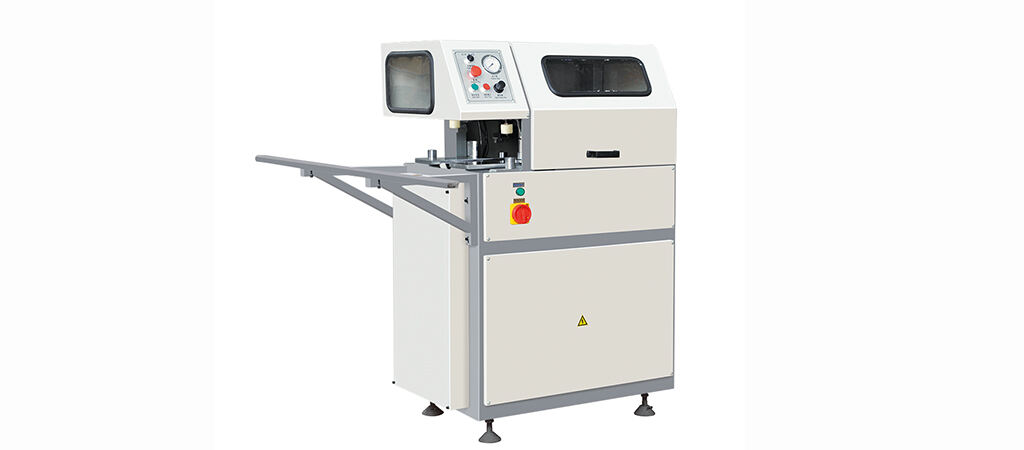
Understanding the Curtain Wall Bending Radius Selection Fundamentals
Why Bend Radius Dictates Structural Integrity and Aesthetic Continuity in Curtain Walls
Choosing the right bending radius for curtain walls really matters because it decides if aluminum profiles can handle structural loads while keeping those clean visual lines intact. When the radius is too small, stress builds up on the inside surface, which can lead to cracks. These cracks not only look bad but also break down weather seals and weaken how much weight the structure can hold, something especially important in areas prone to earthquakes. On the flip side, making the radius too big creates flat spots that mess with how the glass meets the frame. According to industry numbers, even tiny deviations from the standard ± 0.5 mm tolerance result in about 15% more complaints about appearance issues, as noted in a recent study on architectural bending tolerances. Getting this right means finding that sweet spot where physics meets aesthetics. Manufacturers need to pick the smallest possible radius that still allows the metal grains to flow smoothly without any particles getting stuck, all while maintaining consistent shapes across the entire facade.
The Critical Role of Material Thickness: From 1.5 mm to 4.0 mm Profiles in Real-World Facades
The thickness of material plays a major role in determining what bend radii work best, based on the radius-to-thickness ratio known as R/t. When working with thin 1.5 mm mullion caps, keeping a 1:1 ratio helps minimize springback issues and stops splits from happening. On the flip side, thicker load bearing parts like 4.0 mm sections need at least a 2.5 times thickness radius, which means around 10 mm or even more, so they can handle the compression forces properly. Looking at real world data, there have been plenty of problems reported when people try to bend 3 mm thick 6061-T6 aluminum beyond those 1.8t limits mentioned earlier. The reports show cracks appearing about three times more often than normal according to the Facade Material Performance Report released last year. With thicker panels, springback becomes an even bigger concern. A standard 4.0 mm sheet bent at 90 degrees might actually bounce back between 8 to 12 degrees after forming. This means manufacturers need to compensate by overbending slightly during their aluminum profile bending process. Following these guidelines cuts down on wasted materials by roughly 40 percent and gets the final angles within about plus or minus 0.3 degrees accuracy.
Alloy, Temper, and Grain Direction: Key Aluminum-Specific Factors in Bend Radius Selection
6061-T6 vs. 3003-O: How Yield Strength and Elongation Define Minimum Safe Radius
The material characteristics really matter when choosing the right bending radius for curtain walls. Take 6061-T6 aluminum for instance it has pretty good yield strength at least 240 MPa but not so great when it comes to stretching before breaking around 10% elongation. This means we need bigger radii to avoid cracks forming during fabrication. On the flip side, 3003-O aluminum isn't as strong but can stretch much further up to about 30%, which allows for tighter bends without issues. Looking at real world numbers from manufacturers, when working with 2.5 mm thick sheets of 6061-T6, anyone trying to bend them with a radius smaller than 2.5 times the thickness will end up with visible cracks in roughly 8 out of 10 cases. Finding the sweet spot for bend radius in aluminum profiles is all about striking the right balance between how much tension the material can handle versus how much it can stretch. And remember, what works for one particular alloy doesn't necessarily translate across different thicknesses or temper states either.
Temper Matters: Why T0 Offers Superior Formability—and When T6 Is Non-Negotiable for Load-Bearing Mullions
Temper directly governs bend feasibility:
- T0 (Annealed): Maximizes ductility for complex curves, ideal for aesthetic non-structural elements
- T6 (Solution Heat-Treated): Essential for load-bearing mullions despite requiring larger radii—its 30% higher fatigue strength prevents facade failure under wind loads
For mullions exceeding 3 m spans, T6's structural stability outweighs bending challenges. Springback exceeds 12° in T6 versus 3° in T0, necessitating overbending techniques and temper-specific tooling adjustments. Precision bending for facade aluminum profiles must therefore account for both mechanical requirements and post-forming behavior—not just initial formability.
Avoiding Failure: How Incorrect Bend Radius Impacts Cracking, Springback, and Dimensional Accuracy
Crack Incidence Data: The 2.5t Threshold for 3 mm 6061-T6 and Its Production Implications
When aluminum profiles for curtain walls get bent beyond their minimum radius, they tend to develop serious cracks. Take 3mm thick 6061-T6 material for instance the accepted limit sits around 2.5 times thickness, which translates to about 7.5mm radius. Go tighter than that and things start going wrong fast industrial data shows something like a two thirds increase in cracking problems. These failures create all sorts of headaches down the line. Rework alone can cost upwards of seven hundred forty thousand dollars according to Ponemon's latest report from last year. And don't forget about wasted materials either we're talking nearly twenty percent more scrap when those mullions end up cracked. For anything structural, sticking to these guidelines isn't optional. Once the integrity is gone, no amount of paint or sealing will fix what's fundamentally broken inside.
Springback Prediction and Compensation: Linking Radius-to-Thickness Ratio with Post-Bend Tolerance Drift
Springback distortion directly correlates with your radius-to-thickness (R/t) ratio. Higher R/t ratios amplify elastic recovery—for instance, an R/t of 8 creates 3° springback in 304 stainless versus 1.5° in aluminum. This dimensional drift violates architectural bending tolerance guidelines, causing misaligned joints in curtain wall systems. Mitigation requires proactive compensation:
- Overbend angles by 2–5° beyond target
- Apply pressure-holding techniques during forming
- Use grain-parallel bending for anisotropic alloys
Neglecting these measures risks tolerance deviations exceeding ±1.5 mm—critical in high-rise facade applications where cumulative error across dozens of mullions compromises interface integrity with adjacent building systems.
Profile Geometry and Bending Orientation: Practical Constraints for Curtain Wall Bending Radius Selection
Easy Way vs. Hard Way Bending: How Width, Depth, and Multi-Chambered Design Alter Radius Feasibility
The way aluminum curtain wall profiles bend really depends on their orientation. When bent the "easy way," meaning parallel to the shorter side, they can handle tighter curves with much less force applied. But try bending them the "hard way" along the longer dimension and suddenly those same profiles demand much larger radii just to prevent deformation issues. Take a standard 100 mm wide mullion for instance. Bending it along its 20 mm depth (the easy direction) might give us around a 2t radius, while attempting to curve it across its full width would likely require 4t or even more space. Things get even trickier with multi-chambered designs. These modern profiles often include internal stiffeners that make them more energy efficient but also create problems during tight bends. Those stiff sections actually resist compression forces, which means our minimum radius needs jump anywhere from 15% to 30% higher than what we'd see with simple single cavity extrusions. This geometric reality has major consequences when selecting appropriate bending radii for curtain walls. Going beyond what the material can handle typically results in unsightly ripples on convex surfaces or dangerous buckling at inner corners. Industry professionals generally recommend sticking with the easy-way orientation whenever feasible. Before committing to production runs though, especially with profiles wider than three times their depth, running FEA simulations becomes absolutely essential to confirm whether proposed bends will work without compromising structural integrity.
FAQs
What is the ideal bend radius for 6061-T6 aluminum in curtain walls?
The ideal bend radius for 6061-T6 aluminum in curtain walls should be no smaller than 2.5 times the thickness of the sheet to avoid cracks during fabrication.
How does material thickness impact bending in curtain walls?
Material thickness impacts the bending radius selection through the radius-to-thickness ratio, where thicker materials require larger radii to avoid compression force issues.
Why is grain direction important in bend radius selection?
Grain direction is important because it affects how the material will respond to bending forces, influencing crack prevention and the overall structural integrity of curtain walls.
What role does temper play in curtain wall bending?
Temper plays a critical role, with T0 offering better formability for non-structural elements, while T6 provides needed strength for structural applications despite requiring larger bend radii.
Table of Contents
- Understanding the Curtain Wall Bending Radius Selection Fundamentals
- Alloy, Temper, and Grain Direction: Key Aluminum-Specific Factors in Bend Radius Selection
- Avoiding Failure: How Incorrect Bend Radius Impacts Cracking, Springback, and Dimensional Accuracy
- Profile Geometry and Bending Orientation: Practical Constraints for Curtain Wall Bending Radius Selection
- FAQs