 EN
EN

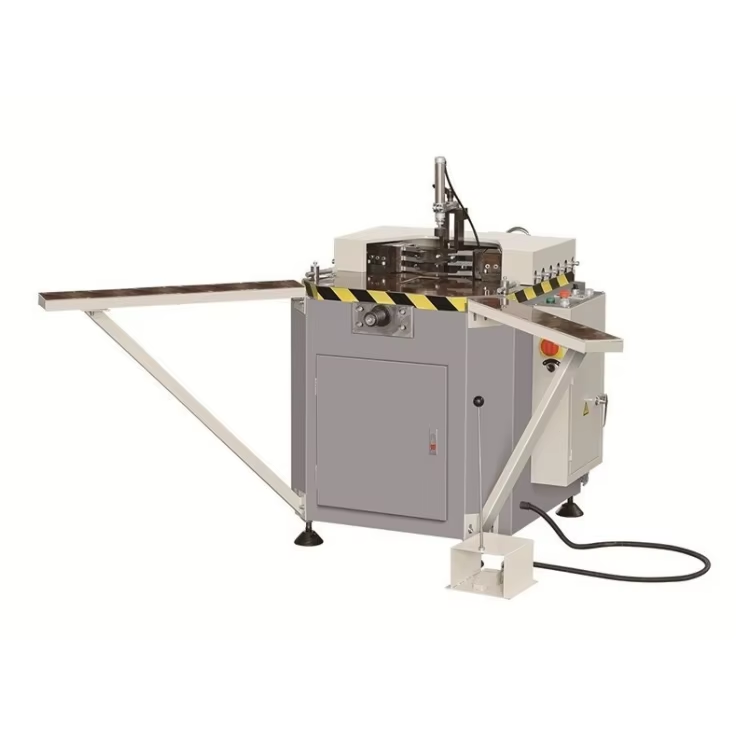
Why a Servo-Electric Corner Crimping Upgrade Delivers Measurable ROI
Overcoming Pneumatic/Hydraulic Limitations: Inconsistent Force, High Maintenance, and Energy Waste
Old school pneumatic and hydraulic crimping systems really hurt the bottom line because of three main problems they just can't seem to fix. First off, they deliver inconsistent force during operations. Second, they require constant maintenance. And third, they eat up way too much energy. Let’s look at pneumatic systems first. These guys have trouble with pressure changes and worn out seals, which leads to bad crimps either too loose (and they leak) or too tight (and the whole part gets thrown away). Hydraulic systems solve the air problem but create new headaches for shop managers. Maintenance becomes a nightmare with all those seals, filters, and fluids needing replacement. Industry folks report spending between 15 to 30 hours every year on each machine just keeping it running. What’s worse for everyone’s wallet? Both types waste massive amounts of power. Pneumatics turn about 70% of their electricity into useless heat instead of actual work. Hydraulics keep their pumps running nonstop even when nothing needs crimping. Switching to servo electric systems fixes all this mess. They provide exact control over force application without needing compressors or messy hydraulic fluids. Shops that made the switch saw energy bills drop around 60% and saved about 40% on maintenance time. Real world tests in aluminum fabrication plants back up these numbers too.
Precision & Repeatability Gains: How Servo Control Enables ±0.15 mm Crimp Tolerance in Aluminum Window Frames
The shift to servo electric drives has really changed how accurate crimping operations can be. These systems use closed loop position control along with real time torque monitoring that makes all the difference. Traditional pneumatic actuators operating in open loop mode simply can’t match this level of precision. Servo motors working with multi turn absolute encoders keep positions repeatable within about plus or minus 0.15 mm. That matters a lot when making leak proof aluminum windows. If there's any deviation beyond 0.3 mm, those joints will fail completely. The improved accuracy cuts down on scrap because corners get mitered consistently without needing someone to fix them manually. Manufacturers running large volumes find that getting rid of rework costs alone pays off quickly enough. Some shops have seen material savings between 18 and 22 percent once they switched from old fashioned manual or pneumatic crimping methods to these new servo electric setups. Plus, programmable force profiles give operators much more flexibility. They can adjust settings on the fly to handle different alloy thicknesses and various profile shapes during one production run something fixed pressure hydraulic systems just can’t do.
Key Technical Specifications for a Successful Servo-Electric Corner Crimping Upgrade
High-Overload Torque Motors for Intermittent Crimping Cycles Without Thermal Derating
For corner crimping applications in aluminum frames, servo electric systems need special motors built for those brief but intense torque demands. These high overload torque motors can actually produce around three times their normal torque rating for just a second at a time. That means they maintain good crimp pressure without getting hot and losing power, which happens all too often with regular servos. The result? Consistent quality throughout an entire 8 hour workday, cutting down scrap rates by about 18% when running at high volumes according to Precision Manufacturing Journal last year. When compared against hydraulic systems, these electric motors save between 15 and 20 percent on energy costs per cycle. Plus, because they run cooler overall, parts tend to last about twice as long. And let’s face it, nobody wants downtime when dealing with reinforced profiles that require multiple consecutive crimps anyway.
Multi-Turn Absolute Encoders and Safe Torque Off (STO) Compliance for Uninterrupted Position Recovery
Multi turn absolute encoders track position continuously without losing data through any number of rotations, so there’s no need to reset positions after power goes out or when emergencies happen. These encoders work really well with drives that have Safe Torque Off certification. When technicians need to perform maintenance, these systems can instantly cut off torque while still keeping track of where everything was positioned. The STO standard actually aligns with ISO 13849-1 requirements for safety, which cuts down on restart time by about 90 percent compared to shutting down the whole system. For companies making aluminum windows, this setup keeps crimp alignment tight within plus or minus 0.15 mm even during sudden stoppages. Without such compliance, misaligned parts create around 5% waste according to Industrial Automation Review from last year. Overall, this technology helps keep operations running smoothly and makes sure workers stay safe when changing tools or doing regular maintenance tasks.
Step-by-Step Implementation of the Servo-Electric Corner Crimping Upgrade
Phase 1: Mechanical Compatibility Audit – Mounting, Linkage, and Load Path Assessment
Begin with a rigorous mechanical compatibility audit to ensure seamless physical integration. Assess mounting plate dimensions, linkage geometry, and structural load path integrity under peak crimping forces (e.g., 15 kN on reinforced aluminum profiles). Key actions include:
- Measuring existing actuator stroke lengths and pivot point clearances
- Validating frame rigidity to prevent harmonic vibration under servo-driven torque
- Simulating worst-case load scenarios using finite element analysis (FEA) where feasible
- Identifying potential interference points in line layout, including adjacent conveyors or tooling
This phase mitigates commissioning risks and reduces retrofit downtime by up to 40%, per industry automation benchmarks.
Phase 2: Electrical & Control Integration – PLC Interface, Safety Circuitry, and HMI Retrofit Strategy
Modernize control architecture in alignment with existing infrastructure using these targeted steps:
- PLC Interface Mapping: Configure PROFINET or EtherCAT protocols to synchronize servo drives with legacy controllers—ensuring deterministic timing between positioning, transfer, and crimping sequences
- Safety Circuitry Implementation: Integrate STO-certified drives with redundant emergency stop logic and dual-channel safety relays
- HMI Modernization: Deploy intuitive touchscreens displaying live crimp tolerance analytics (±0.15 mm), cycle time metrics, and energy consumption trends
Prioritize encoder calibration during commissioning to lock in positional repeatability. Post-upgrade validation should confirm seamless material handling and energy reductions of 30–60% versus hydraulic baselines—consistent with results observed across high-volume aluminum window retrofits.
Proven Results: Servo-Electric Corner Crimping Upgrade in High-Volume Aluminum Window Production
Manufacturers who switch to servo electric corner crimping see some pretty impressive improvements in their operations. Big aluminum window makers have noticed cycle times dropping anywhere from three quarters to almost all of what they used to take when running on old pneumatic systems. The secret sauce here is those synchronized movements between positioning, transferring materials, and actually doing the crimping itself. When it comes to making sure everything fits just right, torque controlled crimping keeps depths within about 0.15mm difference across the board. No more rejected frames because someone applied too much or too little pressure during production. And let’s not forget about saving money on materials either. Plants using this method typically waste around 18 to maybe 22 percent less material at those critical load bearing points where structural integrity matters most.
The old problem of thermal derating that used to stop production every 90 minutes is now gone. Modern systems use multi turn encoders that remember where things were even after losing power, while safety circuits following STO standards keep machines from turning on accidentally when someone’s working on them. Big name manufacturers report cutting energy use down by around 60% compared to those old hydraulic systems. Add in less wasted material, faster production rates, and cheaper maintenance bills, and most companies see their money back on these electric upgrades in just over a year.
FAQ
What are the main disadvantages of pneumatic and hydraulic crimping systems?
Pneumatic and hydraulic crimping systems often suffer from inconsistent force, high maintenance requirements, and significant energy waste. Pneumatic systems face pressure changes and seal wear leading to suboptimal crimps, while hydraulic systems demand extensive maintenance and continually waste energy by running pumps unnecessarily.
How does a servo-electric system improve crimping processes?
Servo-electric systems provide precise control over force application, reducing energy consumption by approximately 60% and maintenance time by nearly 40%. They ensure accurate crimp tolerance due to closed-loop position control and real-time torque monitoring, leading to reduced scrap rates and improved operational efficiency.
What are high-overload torque motors?
High-overload torque motors are specialized motors designed for intermittent crimping cycles, able to deliver approximately three times their normal torque rating for a second. They help maintain consistent crimp quality without thermal derating.
What role do multi-turn absolute encoders play in servo-electric systems?
Multi-turn absolute encoders continuously track position without data loss through rotations, facilitating positional recovery even after power failure. They enhance precision and reduce waste, maintaining crimp alignment within tight tolerances.
Table of Contents
- Why a Servo-Electric Corner Crimping Upgrade Delivers Measurable ROI
- Key Technical Specifications for a Successful Servo-Electric Corner Crimping Upgrade
- Step-by-Step Implementation of the Servo-Electric Corner Crimping Upgrade
- Proven Results: Servo-Electric Corner Crimping Upgrade in High-Volume Aluminum Window Production
- FAQ