 EN
EN

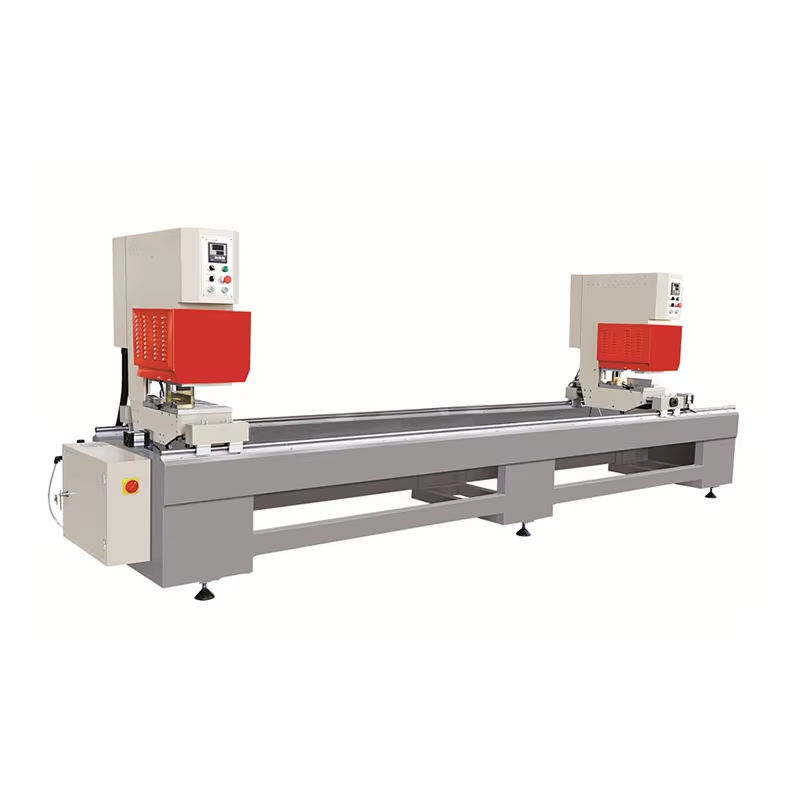
Why Advanced Composites Challenge CNC Window Processing Machines
The adoption of advanced composites in CNC window processing introduces unique machining complexities that demand specialized equipment adaptations. These high-performance materials—while offering superior strength-to-weight ratios and corrosion resistance—generate distinctive stress patterns during cutting that conventional machines aren't engineered to handle.
Fiber-Reinforced Polymers: Delamination Risks and Accelerated Tool Wear
Working with fiber reinforced polymers presents manufacturers with two big headaches at once: layers tend to separate during cutting operations, and cutting tools just don't last very long. The material's directional properties mean that when cutting force gets too high, those layers simply pull apart from each other. This happens especially often with standard straight flute cutting tools. At the same time, those tough reinforcement fibers like glass or carbon really take their toll on cutting edges. We've seen shop floor data showing these fibers can wear down cutting tools about five times quicker compared to regular aluminum work. Dealing with both takes some serious planning and specialized equipment in most production environments.
- Diamond-coated tooling to resist abrasion
- Compression routing techniques that stabilize layers under load
- Reduced feed rates (typically below 3 m/min) to minimize lifting forces
Without these adaptations, subsurface damage—often invisible during initial inspection—can push scrap rates above 15%.
Carbon-Fiber and Hybrid Frames: Compromises Between Lightweight Design and Machining Rigidity
Carbon-fiber frames epitomize the trade-off between material advantages and manufacturability. Though their ~70% weight reduction versus steel supports energy-efficient window systems, their low vibration damping demands CNC machines with exceptional structural integrity:
- Static stiffness exceeding 50 N/µm
- Vibration-absorbing polymer concrete bases
- High-torque spindles (15+ kW) maintaining <5 µm runout
| Machining Factor | Carbon-Fiber | Hybrid (CF/Aluminum) | Requirement |
|---|---|---|---|
| Cutting Force | Low | Variable (±30%) | Adaptive feed control |
| Thermal Conductivity | Poor (0.5 W/mK) | Mixed | Cryogenic cooling |
| Chip Evacuation | Critical | Problematic | 300+ psi air blast |
Hybrid frames intensify complexity by introducing discontinuous cutting forces as tools transition between materials—often requiring real-time rigidity adjustments via piezoelectric actuators on advanced CNC platforms.
High-Strength Metals and Superalloys in Architectural Windows
The integration of high-strength metals and superalloys—such as nickel-based Inconel-625—into architectural windows presents distinct CNC processing challenges. Engineered for high-temperature stability and extreme hardness, these materials rapidly degrade standard tooling and generate intense localized heat, demanding precise thermal management and adaptive toolpath strategies.
Machining Nickel-Based Alloys: Thermal Management and Tool Life Constraints
Nickel-based superalloys require roughly 40% lower cutting speeds than conventional metals to prevent heat accumulation. Without effective coolant delivery, temperatures at the cutting interface can surpass 1,800°F (982°C), accelerating tool wear by up to 300% according to aerospace machining studies. Critical mitigation strategies include:
- High-pressure through-tool coolant systems to dissipate heat directly at the cutting edge
- Ceramic or diamond-coated tools to resist adhesion and diffusion wear
- Reduced radial engagement depths to limit thermal stress buildup
- Real-time temperature monitoring to avoid work hardening
Real-World Impact: Inconel-625 Anchor Machining Demands on CNC Rigidity and Spindle Power
Machining Inconel-625 for structural window anchors exposes critical limitations in standard CNC platforms. A 2023 aerospace manufacturing analysis found that processing 1-inch-thick Inconel requires:
- Minimum 30 HP spindle power (versus 15 HP for stainless steel)
- Vibration-damping cast iron frames with >20,000 N/mm static rigidity
- 0.0005" positional accuracy to meet anchor hole tolerance specifications
Inadequate spindle torque leads to chatter—increasing surface roughness by 60% and compromising fatigue resistance in load-bearing components.
Brittle, Thermally Sensitive Materials - Glass, Ceramics, and Laminates
Tempered and Insulated Glass: Why Conventional CNC Feed Strategies Cause Chipping and Stress Fracture
Tempered and insulated glass exhibit high thermal resistance but critically low fracture toughness. Their atomic structures lack plasticity—stress concentrates at microscopic flaws rather than deforming plastically. When subjected to conventional CNC feed strategies, three primary failure modes emerge:
- Thermal shock: Rapid tool friction creates localized temperature spikes exceeding 500°C, triggering subsurface cracks in glass (thermal expansion coefficient: 8–9×10^-6/°C)
- Vibration-induced fractures: Rigid tool pressure propagates existing surface flaws—tempered glass's strength is only ~1% of its theoretical bond limit
- Edge delamination: Insulated glass units suffer interlayer separation when vibration exceeds 0.5g during machining
Standard carbide tools operating at 300–400 m/min generate peak forces over 200N—sufficient to initiate catastrophic brittle failure in 92% of architectural glass panels. Slower, modulated feeds paired with diamond-coated tools reduce fracture rates by 60%, confirming that material-specific strategies are essential for precision outcomes.
Next-Gen CNC Solutions for Diverse CNC Window Processing Materials
Adaptive 5-Axis Control and AI-Optimized Feeds for Material-Specific Machining Stability
Today's CNC machines tackle different material issues using smart 5 axis movement and artificial intelligence that adjusts how fast things cut. The system changes where the tools go and what settings they use as work happens, which helps stop problems like layers coming apart in fiber reinforced plastics, cracks forming in layered glass because of heat stress, and unwanted vibrations when working with nickel alloys. Take AI for instance it looks at how much shaking there is during cutting plus feels back on forces applied so it keeps pressure just right on tough stuff. This actually cuts down tool damage by around 40 percent over old fashioned fixed programs according to tests run in factories. With five axes moving together, operators can angle into parts at odd angles without bending them too much especially important for those carbon fiber frames that need strength but not weight gain. Also good for keeping edges clean on fragile materials since the machine knows exactly how to get in and out without causing chips or breaks. What makes these systems stand out though is their ability to remember past jobs and improve over time making sure everything stays stable no matter what kind of material gets put through the CNC window manufacturing process.
FAQ
-
What are the main challenges in machining advanced composites for CNC window processing?
Advanced composites present challenges such as delamination risks, accelerated tool wear, vibration issues, and thermal management needs. -
How do fiber-reinforced polymers affect cutting tools?
Fiber-reinforced polymers can wear down cutting tools up to five times faster than conventional materials, necessitating special adaptations. -
Why are hybrid frames complex to machine?
Hybrid frames involve varying cutting forces and require real-time rigidity adjustments to ensure machining accuracy and stability. -
What are the machining requirements for nickel-based superalloys?
Machining nickel-based alloys requires lower cutting speeds, effective thermal management, high-pressure coolant systems, and durable tooling. -
What solutions are employed in advanced CNC machines for diverse materials?
Advanced CNC solutions include AI-optimized feeds, 5-axis control, adaptive machining strategies, and specialized tooling to handle various materials.