 EN
EN

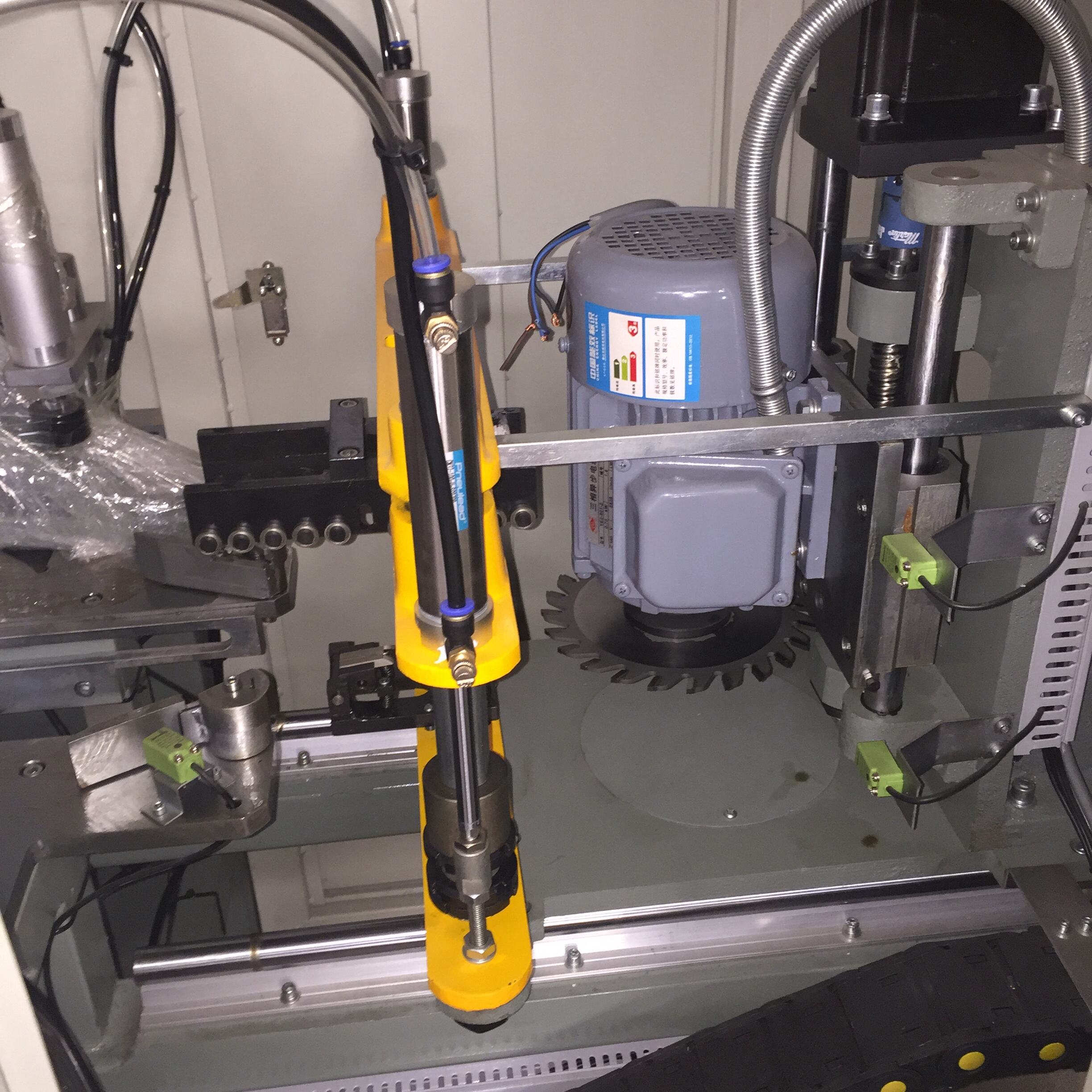
Hydraulic and Pneumatic Pressure Settings: Core Corner Crimping Force Parameters
Precise pressure regulation forms the foundation of consistent corner crimping force. Calibrating pressure relief valves ensures force thresholds remain within tolerance, while managing system backpressure prevents fluctuations during extended operations—unregulated backpressure can cause force deviations exceeding 15%, compromising joint integrity.
Pressure Relief Valve Calibration and System Backpressure Effects on Consistent Corner Crimping Force
Proper valve calibration maintains peak pressure at ±2% of target specifications. Backpressure—often caused by fluid viscosity or flow restrictions—introduces hysteresis that distorts force curves. Mitigation requires regular valve testing with certified gauges, optimized hydraulic line diameters, and viscosity-matched fluids operating at 40–60°C.
Pneumatic vs. Hydraulic Actuation: Stability, Responsiveness, and Force Repeatability in Corner Crimping
Hydraulic systems deliver superior force stability (±3% repeatability) due to fluid incompressibility—ideal for high-precision crimps. Pneumatic alternatives offer faster cycle times but exhibit ±8% force variation under load shifts. Key trade-offs:
| Parameter | Hydraulic | Pneumatic |
|---|---|---|
| Force Consistency | 97–99% | 90–92% |
| Response Time | 0.5–1.2 seconds | 0.1–0.3 seconds |
| Maintenance | Fluid monitoring | Seal replacements |
For critical applications like aerospace connectors, hydraulic pressure control reduces rework rates by 34% [Process Validation Journal, 2023].
Mechanical Force-Limiting Elements: Stops, Levers, and Spring Systems
Fixed and Adjustable Mechanical Stops for Reproducible Crimp Depth and Force Capping
Corner crimping force gets controlled by engineers using physical limits to stop over compression from happening. Fixed stops set where the crimping ram can go no further, which helps create consistent flange shapes every time. For different connectors and wire sizes, adjustable stops come into play. These stops limit how much force gets transferred during the process, even when there are changes in hydraulic pressure levels. Both fixed and adjustable options work together to maintain quality while adapting to various requirements on the production line.
Key advantages include:
- Elimination of force drift in high-volume production
- Immediate interruption if material thickness exceeds specifications
- Mechanical failure protection during tooling misalignment
Spring systems complement these stops by absorbing residual kinetic energy, reducing rebound effects that degrade crimp consistency. Combined with real-time force calibration, these elements form the foundation of reliable crimp quality control—standardized implementations reduce rework rates by over 40% in industrial case studies.
Workpiece-Dependent Parameter Interactions: Wire, Connector, and Frame Geometry
Wire Cross-Section and Connector Type as Determinants of Required Corner Crimping Force (IEC 60352-2 Guidance)
The size of the wire and how terminals are designed play a big role in figuring out what kind of crimping force is needed at corners. Thinner wires like those around 0.5 mm squared just need gentle squeezing compared to the much thicker ones above 6 mm squared. And when dealing with insulated connectors, extra muscle power is necessary to get through that protective covering. Industry standards such as IEC 60352-2 give guidelines on how hard to push depending on materials used. For instance, tin coated copper generally takes about 15 to maybe even 20 percent less effort than working with nickel based alloys. Not enough pressure leads to wobbly connections down the road, but going too heavy can actually snap individual strands inside the wire. That's why modern crimping equipment comes equipped with systems that tweak their grip strength automatically based on all these factors we've been talking about.
Corner Geometry and Frame Material Effects: Aluminum vs. PVC Profile Compression Behavior
Frame corner angles and material properties critically influence force distribution. Aluminum exhibits linear elastic deformation, requiring consistent force to achieve permanent crimp deformation. PVC behaves viscoelastically—it creeps under sustained pressure, needing lower initial force but longer hold time. Key differences:
- Aluminum: 120° corners require 30% higher force than 90° joints due to stress concentration
-
PVC: Softens above 60°C, necessitating temperature-compensated pressure adjustment
Material thickness variations (±0.2 mm) can alter required force by up to 12%, demanding real-time process automation.
Validation and Control: Calibration Protocols and Real-Time Force Monitoring
Load Cell–Based Force Calibration and ISO/IEC 17025–Aligned Process Validation
Calibration using load cells is really important for making sure we get accurate readings when checking crimping forces. These devices convert physical pressure into electrical signals that can be measured against standard Newton units. When following ISO/IEC 17025 guidelines, manufacturers need to document how uncertain their measurements might be and account for things like temperature changes affecting results. Putting in place sensors that monitor force in real time allows for automatic corrections too. If the system detects any deviation beyond plus or minus 2%, it stops the operation right away. This helps prevent connectors from failing due to insufficient compression which saves companies money over time. Some estimates suggest around seven hundred forty thousand dollars saved each year just from avoiding recalls according to research published by Ponemon Institute back in 2023. The same technology works great for those tricky corner cases where crimping forces aren't quite right because materials sometimes behave differently than expected. These systems give instant alerts when something goes wrong and create detailed records needed for certification processes in industries like medicine and space exploration where precision matters most.
Key safeguards implemented:
- Strain-gauge verification against dead-weight testers every 500 cycles
- Temperature-compensated measurements to counteract thermal drift in hydraulic systems
- Statistical process control (SPC) dashboards tracking force trends across production batches
This dual approach of dynamic monitoring and standardized calibration ensures crimp integrity across aluminum and PVC frames—critical where 85% of field failures originate from inconsistent corner compression (IEC 60352-2 Annex B).
FAQs
What role does valve calibration play in hydraulic and pneumatic pressure settings?
Valve calibration maintains system pressure within ±2% of target specifications, ensuring consistent corner crimping forces.
How does workpiece geometry affect corner crimping force?
The geometry, including wire cross-section and connector type, influences the necessary crimping force; specific standards provide guidance for different materials.
Why are hydraulic systems generally preferred over pneumatic systems for crimping applications?
Hydraulic systems offer superior force stability, achieving ±3% repeatability, ideal for high-precision applications compared to pneumatic systems.
Table of Contents
- Hydraulic and Pneumatic Pressure Settings: Core Corner Crimping Force Parameters
- Mechanical Force-Limiting Elements: Stops, Levers, and Spring Systems
- Workpiece-Dependent Parameter Interactions: Wire, Connector, and Frame Geometry
- Validation and Control: Calibration Protocols and Real-Time Force Monitoring
- FAQs