 EN
EN

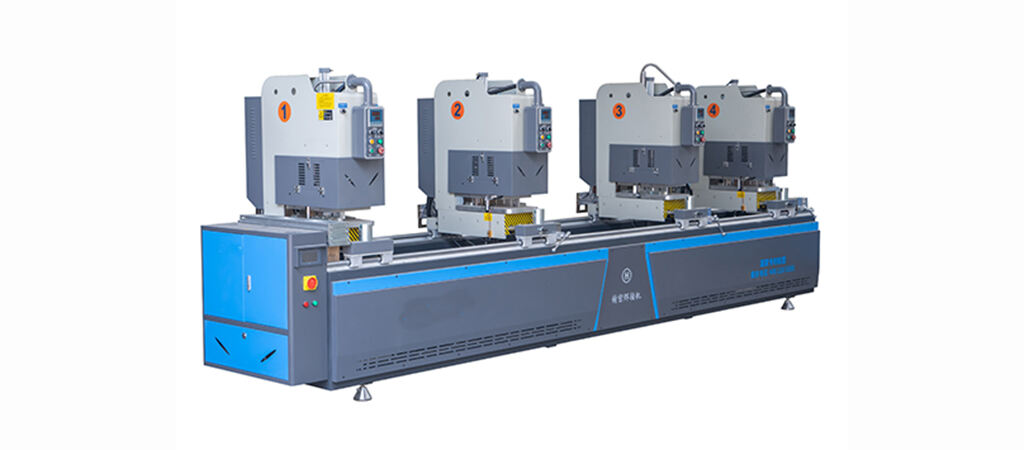
Why Vision System Gasket Placement Verification Is Critical for Fenestration Quality
When gaskets aren't properly aligned in window frames, water gets in right away and structural problems develop over time. Research indicates that even small misalignments beyond plus or minus 0.3 mm can affect around half of all window seals. Visual inspection systems handle these precision challenges better than what humans can manage, spotting those tiny position errors that our eyes just miss. These hidden flaws create paths for air to leak through, costing buildings roughly 30% of their total energy usage. Problems with gasket placement lead to bigger issues throughout the life of windows too. Often installation problems don't show up until after everything's installed, making repairs much more expensive since workers have to tear apart parts of the building facade. Getting rubber seals positioned correctly at the factory level helps manufacturers avoid those costly warranty claims that typically run about $70k each. This approach also makes it easier to meet AAMA standards because we're checking positions continuously instead of randomly sampling as was done before. With automated checks for proper sealing, windows stay tighter against moisture getting in, which stops frame rotting and mold growth that's been found in nearly a quarter of early window replacements.
Core Technical Requirements for Reliable Vision System Gasket Placement Verification
Getting accurate gasket placement right in vision systems needs some pretty strict specs both optically and mechanically. The tolerance here is around ±0.15 mm, which is actually about half the thickness of a single strand of human hair. To hit that kind of precision, systems must be calibrated at sub-pixel levels with resolutions above 15 microns per pixel. Most setups use high res sensors combined with those special telecentric lenses that cut down on parallax issues. And let's not forget the software side either. Smart adaptive algorithms are essential because they handle the inevitable thermal shifts that happen during long production runs on assembly lines.
Sub-pixel alignment tolerance and optical resolution for ±0.15 mm gasket offset detection
Industrial standards like ASTM E283 mandate ±0.3 mm gasket deviations to prevent air/water infiltration in fenestration. Achieving ±0.15 mm detection necessitates:
- 5 MP+ global-shutter sensors capturing 0.02 mm/pixel details
- Computational imaging stacking 8 frames to resolve 0.12 µm sub-pixel offsets
- Real-time distortion correction using neural networks, reducing false rejects by 32% (International Journal of Optomechatronics 2023)
Lighting-sensor-lens co-design to maximize rubber seal contrast under factory conditions
Variable ambient lighting in factories causes 70% of vision inspection failures. Multi-spectral solutions overcome this through:
- Coaxial LED arrays with 6500K CRI >90 to highlight dark rubber against aluminum frames
- HDR imaging balancing shadows from robotic arms at 120 dB dynamic range
- Optical bandpass filters blocking extraneous IR/UV interference
This integration maintains SNR above 40 dB across 200–2000 lux conditions—critical for robust automated seal inspection.
How Modern Vision Systems Perform Gasket Placement Verification: From Detection to Decision
Modern vision system gasket placement verification combines geometric precision with artificial intelligence to ensure flawless window seal installation. This dual-method approach detects sub-millimeter deviations critical for waterproofing and energy efficiency in fenestration.
Hybrid geometric + AI approach: Template matching fused with lightweight semantic segmentation
At first glance, systems rely on template matching techniques to find those gaskets relative to CAD reference points, getting pretty close with around 0.1 mm accuracy most of the time. But there's more going on beneath the surface. The system actually combines this basic geometry with some smart lightweight neural networks that do pixel level segmentation work. These networks can tell apart rubber seals from metal frames even when there are pesky reflections or bits of debris floating around. Traditional approaches just don't cut it here. Our hybrid method keeps detection rates above 99% even when lighting conditions change constantly, all while crunching through images faster than 50 milliseconds. What really sets this apart is how the AI part catches those tricky problems that regular geometry misses out on completely, stuff like when parts start coming loose partially or materials begin to deform in ways that aren't immediately obvious to standard inspection methods.
Real-time continuity and positional validation using edge-optimized convolutional inference
To keep quality consistent across production runs, smart vision systems now check where gaskets sit on assembly lines as they move along. These edge computing models, often using compressed neural network designs, actually run right on the cameras themselves. They look at how well seals are formed and aligned, doing each frame analysis in just under 30 milliseconds. When something goes off track by more than plus or minus 0.3 millimeters, which meets the ASTM E283 standards requirement, the system jumps in immediately. Even when machines are shaking from heavy operations, these visual inspection systems still work reliably about 93% of the time. That means robots can either adjust positions automatically or remove faulty parts from the line before they cause bigger problems, all without waiting for traditional control systems to catch up.
Integration and Validation: Ensuring Vision System Gasket Placement Verification Meets Industry Standards
ASTM E283 and AAMA 101 compliance: Mapping pass/fail criteria to ±0.3 mm misalignment thresholds
Getting window frames assembled right means following those ASTM E283 standards for air leaks and meeting AAMA 101 requirements for how strong they need to be. When it comes down to actually placing those rubber gaskets, even tiny mistakes matter a lot. If the gap is more than 0.3 millimeters anywhere, the whole seal gets compromised. That's where modern computer vision systems really shine these days. They take pictures at the pixel level and then figure out if things are within spec or not. These smart cameras basically turn what we see into yes/no answers about whether something passes quality checks. Why does this matter so much? Well, water getting inside windows leads to all sorts of problems, and companies lose millions every year fixing faulty installations according to Quality Digest from last year. Factories that automate their quality checks instead of relying on workers' eyes have seen dramatic improvements. Most report catching alignment issues with almost perfect accuracy now, somewhere around 99.98% successful detections when seals aren't properly positioned.
Closed-loop integration with robotics and PLCs: ROS-based coordinate alignment and drift compensation
When it comes to getting vision systems, robots, and those PLC controllers working together smoothly, most modern factories rely on ROS frameworks these days. The way this works is pretty impressive actually - cameras spot where gaskets are sitting, then almost immediately send that info to robots telling them exactly how to adjust. We've all seen what happens when machines start drifting due to heat changes or wear and tear, especially in busy production lines. That's why good systems have these constant check-ins going on behind the scenes. Take for instance how some plants use edge computing to fix robot arm positioning problems in just half a second or less. This keeps everything aligned within about 0.15 millimeters even during fast paced assembly work. And let's not forget the big picture benefit here: factories report cutting down on recalibration stops by around three quarters, plus they can keep checking those gaskets continuously without interrupting the workflow.
Deployment Realities: Edge AI, Throughput, and Operational Trade-offs in Vision System Gasket Placement Verification
Optimized edge inference (e.g., quantized YOLOv8n-seal) balancing speed, accuracy, and hardware constraints
Getting edge AI to work for real time gasket continuity checks means putting in serious effort to get around hardware constraints while still keeping precision down at the sub millimeter level. These days most systems use lighter weight models such as the quantized YOLOv8n seal version. This particular model cuts down on computation needs by about 60 percent when compared to regular old CNNs, yet manages to catch those misaligned seals with almost perfect accuracy around 99.2%. What makes this setup so valuable is how fast it processes information, taking no more than 15 milliseconds per window frame. That kind of speed matters a lot on production lines where volumes are through the roof. But there's a catch here too. Getting everything right involves juggling three different elements that often pull against each other, and finding that sweet spot takes quite a bit of trial and error.
| Optimization Dimension | Performance Impact | Implementation Challenge |
|---|---|---|
| Inference Speed | Enables 120+ frames/minute throughput | Requires model quantization and hardware acceleration |
| Detection Accuracy | Ensures ±0.3 mm positional validation | Limited by edge device memory and thermal constraints |
| Hardware Cost | Determines deployment scalability | Demands specialized NPUs or GPUs for real-time analysis |
Industrial studies show that edge processing cuts down on lag time significantly compared to sending data to the cloud first. We're talking about reductions as high as 92% in some cases, which means robots applying seals get instant feedback whenever they detect a missing gasket or something out of alignment. But there's always a catch for manufacturers. Cheaper hardware options tend to miss problems more often too around 1.8% more false negatives. On the flip side, if companies want rock solid quality control for those window assemblies, they'll probably spend about 35% extra on their systems. Finding the right balance point comes down to getting vision systems working reliably above 98.5% accuracy while keeping things running fast enough on the production line. The trick is making sure these systems don't overheat or need expensive liquid cooling solutions. Most plants achieve this sweet spot using smart algorithms that adjust themselves based on what kind of hardware they actually have installed.
FAQ
What is the importance of gasket placement verification in fenestration quality?
Proper gasket placement ensures that windows are sealed correctly, preventing water and air ingress that can lead to structural damage and energy inefficiency.
How accurate does gasket placement need to be?
Vision systems seek to detect gasket placement within ±0.15 mm, which is crucial for maintaining the structural integrity and energy efficiency of windows.
What technologies are involved in vision system gasket placement verification?
Technologies include high-resolution sensors, telecentric lenses, smart adaptive algorithms, neural networks for distortion correction, and optimized edge computing for real-time analysis.
How do modern systems combine geometry and AI for gasket verification?
They use a hybrid approach combining template matching for geometric precision with AI-driven semantic segmentation for identifying gaskets amidst reflections and debris.
What standards must be complied with in gasket placement verification?
ASTM E283 and AAMA 101 standards are essential for ensuring window assemblies meet air, water, and strength requirements.
What are the operational challenges in deploying vision system gasket verification?
Challenges include balancing speed, accuracy, and hardware constraints, as well as the need for real-time processing and minimal latency.
Table of Contents
- Why Vision System Gasket Placement Verification Is Critical for Fenestration Quality
- Core Technical Requirements for Reliable Vision System Gasket Placement Verification
- How Modern Vision Systems Perform Gasket Placement Verification: From Detection to Decision
- Integration and Validation: Ensuring Vision System Gasket Placement Verification Meets Industry Standards
- Deployment Realities: Edge AI, Throughput, and Operational Trade-offs in Vision System Gasket Placement Verification
-
FAQ
- What is the importance of gasket placement verification in fenestration quality?
- How accurate does gasket placement need to be?
- What technologies are involved in vision system gasket placement verification?
- How do modern systems combine geometry and AI for gasket verification?
- What standards must be complied with in gasket placement verification?
- What are the operational challenges in deploying vision system gasket verification?