 EN
EN

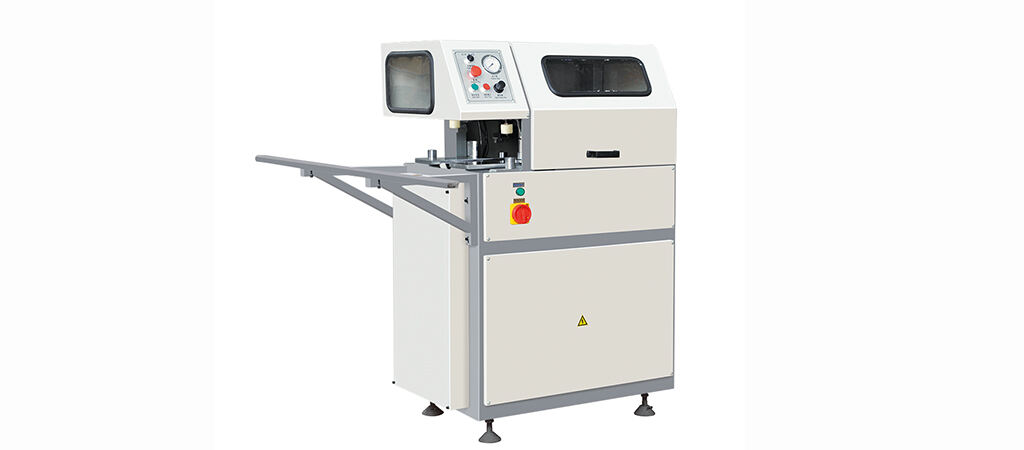
Why Aluminum Bending Machine Environmental Testing Is Critical for Industrial Reliability
Aluminum bending machines used in industrial settings run serious risk of breaking down completely if they haven't gone through proper environmental checks first. When these machines aren't tested properly, exposure to extreme temperatures or repeated cycles of high humidity can cause major problems. We've seen issues like delayed servo responses, drifting hydraulics, and tiny cracks forming in bent parts that eventually lead to unexpected shutdowns. The Ponemon Institute reported last year that this kind of unplanned downtime costs manufacturers around $740,000 on average. That's why smart companies simulate real world conditions during development - think desert heat waves or freezing Arctic temperatures. Machines that pass these tests according to ASTM and ISO standards tend to last about 68% longer between breakdowns according to field data. For businesses making structural aluminum components where tolerances need to stay within 0.1mm for safety reasons, skipping these tests means risking both regulatory fines and expensive warranty claims down the road. Testing against temperature and moisture extremes isn't just some extra step manufacturers can skip. It forms the bedrock of reliable operation and protects investment returns in tough manufacturing conditions.
Key Environmental Stressors: Thermal Extremes, Humidity, and Their Impact on Aluminum Forming
Thermal stress effects on aluminum ductility and springback during bending
When exposed to thermal stress, aluminum shows significant changes in its mechanical behavior. At freezing temperatures and below, the material loses around 30% of its ductility, which means parts tend to spring back between 15% and 25% more after bending processes. On the flip side, when temps climb above 50°C, the yield strength takes a hit too, dropping somewhere between 20% and 40%. This makes the material give way sooner than expected during manufacturing. Because of these temperature effects, most shops rely on real time compensation systems to keep dimensions accurate. Just a simple 10 degree change can throw off bend radii by half a millimeter to over a millimeter in those common 6xxx series alloys. These small variations matter a lot in structural components where tight tolerances are absolutely critical for safety and performance.
Surface sensitivity and micro-crack formation under temperature fluctuation and humidity cycling
Repeated humidity cycling above 60% RH accelerates hydrogen embrittlement in heat-treated aluminum alloys, with studies showing 50% faster crack propagation rates after 100 cycles. Temperature fluctuations above ±15°C/day induce differential thermal expansion between surface grains, creating micro-cracks detectable at 5× magnification. Combined thermal-humidity stress testing reveals synergistic degradation:
- Corrosion acceleration: 200% faster pitting corrosion at 85% RH/40°C vs. controlled conditions
- Fatigue life reduction: 35% shorter lifespan in cyclic humidity environments per ASTM E647
- Surface roughness: Increases up to Ra 1.8µm after 50 thermal cycles (from baseline Ra 0.4µm)
Machine Performance Degradation and Real-Time Compensation Strategies
Servo responsiveness degradation at sub-zero temperatures and mitigation via adaptive PID tuning
When temperatures drop below freezing, aluminum bending machines start to struggle because their servo motors don't work as efficiently. At around -15 degrees Celsius or colder, there's a noticeable delay in response time that can jump anywhere between 40% to 60%. This causes problems with the bending angles, sometimes going off track by more than plus or minus 1.5 degrees. The good news is that adaptive PID controllers help fix this issue by constantly tweaking their settings every 10 milliseconds. These controllers keep the machine positioned accurately within just half a degree error without needing any extra parts or modifications. For manufacturers making window and door frames, this kind of precision matters a lot since even small errors affect how well the final product seals against weather elements. Tests show these systems can handle extreme cold conditions down to -25 degrees Celsius while losing less than half a percent of production capacity. That makes them particularly valuable for construction projects in Arctic regions where reliable equipment performance is absolutely necessary despite harsh environmental conditions.
Crowning stability loss due to hydraulic oil temperature drift: empirical data from −20°C to +50°C
The performance of hydraulic systems changes quite a bit depending on temperature conditions, which affects how consistently aluminum gets formed. Take ISO VG 46 oil for instance its viscosity can swing wildly about three times over when temps move from minus 20 degrees Celsius to plus 50, causing those annoying crowning issues that reach around 0.2 millimeters per meter. What happens next? Well this kind of variation leads to uneven pressure when working with structural aluminum parts during bending processes. And guess what? Micro cracks start showing up in about one out of every five machines that haven't been properly tested according to recent studies published in International Journal of Advanced Manufacturing Technology last year. But there's good news too. When manufacturers implement real time viscosity checks along with smart pressure adjustment software, they cut down those error rates to less than 0.05 mm/m. We've seen this work firsthand in desert mining operations where benders have lasted much longer under harsh conditions. Today these methods are becoming standard practice for testing the reliability of equipment used in building bridges across different climates.
Standardized Aluminum Bending Machine Environmental Testing Protocols and Validation Metrics
ISO 8501-4 and ASTM E1444-Compliant Simulation for Window and Structural Aluminum Machinery
For industrial aluminum bending machines to maintain their structural integrity, they need to handle some pretty harsh conditions. Manufacturers rely on established testing standards such as ISO 8501-4 and ASTM E1444 to put these machines through their paces. These tests recreate tough environments that include temperature swings from minus 40 degrees Celsius all the way up to plus 85, exposure to high humidity levels around 95% relative humidity, and even salt fog conditions. The purpose? To figure out how materials break down over time and what kind of wear affects the machine itself. Such rigorous evaluation gives manufacturers concrete numbers on performance limits and durability factors that matter most in actual factory settings.
- Dimensional Accuracy: Deviation thresholds under thermal drift (±0.1 mm/m)
- Cycle Consistency: Springback variation after 5,000 humidity cycles
- Control Stability: Servo responsiveness within ±2% at operational extremes
Without such environmental simulation for window machinery and structural benders, undetected micro-crack propagation or hydraulic oil viscosity shifts can reduce service life by 40%. Compliance-driven validation ensures bending machines maintain micron-level precision in bridge construction or aerospace fabrication despite fluctuating worksite conditions.
Frequently Asked Questions
Why is environmental testing crucial for aluminum bending machines?
Environmental testing is essential because it helps ensure the reliability and longevity of aluminum bending machines. Extreme temperatures and humidity levels can lead to mechanical failures, costing manufacturers significantly in downtime and repairs.
What are the main environmental stressors affecting aluminum bending machines?
Thermal extremes, humidity cycling, and the resulting micro-cracks are significant stressors. Temperature fluctuations can lead to loss of ductility and issues like springback and yield strength reduction, affecting the bending process.
How do adaptive PID controllers aid in maintaining machine performance?
Adaptive PID controllers improve performance by adjusting their settings continuously. They ensure precise positioning and accuracy, even in sub-zero temperatures, preventing costly errors during manufacturing.
What standards guide the environmental testing of aluminum bending machines?
ISO 8501-4 and ASTM E1444 are among the standards that guide environmental testing. These protocols simulate harsh conditions to ensure machines perform reliably under operational extremes.
Table of Contents
- Why Aluminum Bending Machine Environmental Testing Is Critical for Industrial Reliability
- Key Environmental Stressors: Thermal Extremes, Humidity, and Their Impact on Aluminum Forming
- Machine Performance Degradation and Real-Time Compensation Strategies
- Standardized Aluminum Bending Machine Environmental Testing Protocols and Validation Metrics
- Frequently Asked Questions