 EN
EN

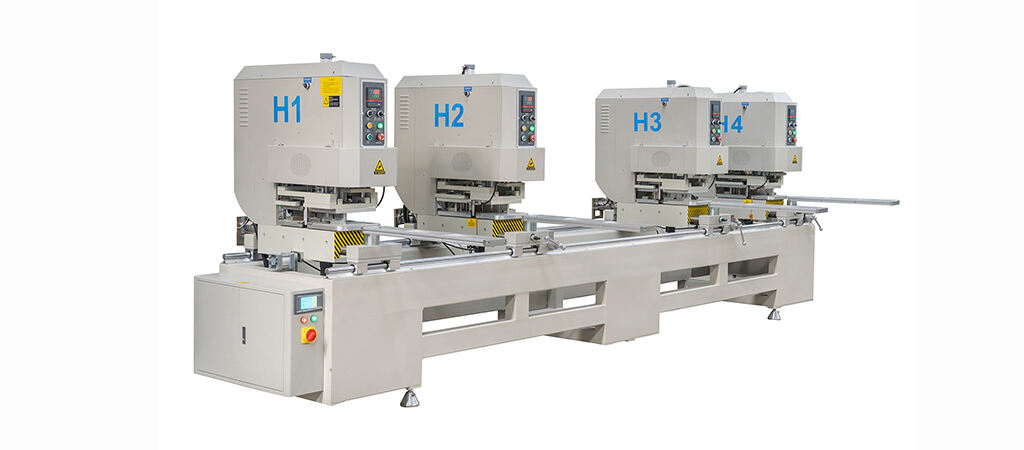
Why Window Machine Serial Number Traceability Is Critical Across the Product Lifecycle
Regulatory, Warranty, and Safety Imperatives in Fenestration Equipment
Manufacturers of windows must follow tight regulations that demand detailed tracking of every component, particularly those involved in critical safety functions. Failing to meet standards such as AAMA 303 can lead to hefty fines, sometimes over $100k for each infraction. Consider what happens when something goes wrong, like seals failing during a hurricane or blizzard. According to industry reports from the Fenestration Industry Association, having serial numbers on file can cut down investigation time after such incidents by around three quarters. For warranty work too, being able to track where parts came from makes all the difference. Companies report about a third fewer fake claims when they have proper records, plus genuine claims get resolved almost twice as fast. Looking at the bigger picture, recalls typically cost around $740 thousand according to Ponemon Institute research from last year. So good traceability practices aren't merely about ticking boxes for regulators anymore. They represent smart business decisions that protect bottom lines while keeping customers safe.
The Five-Link Chain: Raw Material ’ Subassembly ’ Module ’ Final Build ’ Field Deployment
End-to-end traceability in window machine production hinges on synchronizing five interdependent stages—each demanding tailored data capture and linkage:
| Stage | Traceability Focus | Risk Mitigation Example |
|---|---|---|
| Raw Material | Supplier certifications & alloy composition | Flagging non-compliant aluminum batches |
| Subassembly | Welding parameters & QC stamps | Identifying faulty motor brackets |
| Module | Calibration data & firmware versions | Tracing controller programming errors |
| Final Build | Test results & customization specs | Validating safety interlocks |
| Field Deployment | Installation logs & maintenance history | Proactive part replacement alerts |
This integrated chain enables defect containment within 48 hours—preventing an estimated $1.2M+ in annual liability costs for industry leaders. When a thermal sensor fails, serialization identifies affected modules across 12,000 deployed units in minutes—not weeks.
ERP and MES Configuration for End-to-End Window Machine Serial Number Traceability
Overcoming Legacy System Gaps in Engineer-to-Order Manufacturing
Old school manufacturing systems really have trouble handling the constant changes that come with making custom window machines, since no two setups are ever exactly alike. When companies rely on separate databases and old fashioned paper tracking methods, they end up missing critical information about where parts actually came from and how they got assembled. That's where modern Manufacturing Execution Systems (MES) step in to fix things. These systems gather live data throughout the entire production process, making sure everything gets properly labeled according to standard rules even when building something completely different each time. Spreadsheets just can't keep up with this kind of complexity compared to proper MES software. The difference is huge when it comes to knowing exactly which parts went into which products without mistakes. Most manufacturers report cutting down on manual work by around 30% after switching to MES, plus they get complete digital records for audits and compliance checks that would be impossible to maintain otherwise.
Practical Setup: Batch/Serial Cross-Referencing in Modern ERP Platforms
Top enterprise resource planning systems such as SAP S/4HANA and Infor LN allow detailed tracking of serial numbers by creating these dynamic parent-child connections. Take a look at this real world scenario: when a welder marks a part with the ID WS-2024-0876, the system instantly connects that component back to all the raw materials used and forward to the finished product, which might be labeled something like WM-2024-Q3-112 for the complete window assembly. What makes this possible? Well, there are basically three core features that make the whole system work together seamlessly.
- Dynamic BOM Binding: Auto-associates serialized components with modular bills of materials
- Shop Floor Scanning: Operators scan serial tags at each workstation using handheld RFID readers
- Genealogy Reporting: Trace any component upstream to suppliers or downstream to deployed units in under 60 seconds
Post-implementation, manufacturers report 99.7% trace accuracy across 25,000+ customized units annually—and up to 40% reduction in recall-related costs.
Modular BOMs and Component-Level Traceability in Customized Window Machines
How Structured Modular BOMs Enable Mass Customization Without Sacrificing Auditability
Modular BOM structures help sort out all those window machine parts into ready-made building blocks that can be swapped around easily. Think cutting heads, sealing systems stuff like that. These modules work across literally thousands of different setup options without breaking a sweat. What makes them really valuable is how they keep track of every part through their family tree of sorts. Each smaller component gets tagged with the same serial number as its parent module, and this tracking continues right up to the finished product. When something goes wrong on site, say a motor packs it in after months of operation, maintenance crews don't need to dig through paperwork or guesswork. They just follow the serial trail back to exactly where that part came from in the supply chain. Saves tons of time compared to old methods where people had to manually piece together histories.
This architecture delivers measurable advantages:
- Hierarchical tracking: From raw materials to deployed units, fully auditable
- Streamlined recalls: Isolate faults to specific batches in under 10 minutes
- Customization scalability: Build 10,000+ unique configurations from just 50 core modules
- Automated traceability: Serial links propagate through ERP without manual intervention
By designing BOMs around reusable modules—not fixed products—manufacturers achieve both engineering agility and ironclad compliance, proving that mass customization and rigorous traceability are fully compatible.
Real-World Impact: Measuring ROI of Robust Window Machine Serial Number Traceability
Strong serial number tracking brings real financial benefits to companies dealing with warranties, product recalls, and meeting regulations. According to industry reports, manufacturers can slash the time spent finding why defects happen by around 30%. This translates to savings of roughly $250k each time there's a recall situation. The modular nature of good traceability systems makes handling warranty claims much faster too, cutting processing times nearly in half because coverage checks happen instantly against detailed build records. Factories see about 20% less material waste when they track batches precisely. Plus, automated reports for compliance requirements save approximately $180k yearly on what used to be tedious manual audits. For window machine producers operating in regulated markets, having solid traceability isn't just nice to have it's essential for doing large scale custom orders while still keeping proper audit trails intact. Most facilities that implement these systems completely usually get their money back within 18 months from all the operational efficiencies plus reduced risks.
FAQ
Why is traceability important in window machine production? Traceability is crucial because it helps manufacturers comply with regulations, ensures safety, prevails over warranty disputes, and reduces recall costs.
How does serialization help manage defects? Serialization enables quick identification and containment of defects across deployed units, significantly reducing risk and liability costs.
What are the advantages of using MES and ERP systems? These systems offer real-time tracking and data gathering, reducing manual work and improving trace accuracy and compliance checks.
Table of Contents
- Why Window Machine Serial Number Traceability Is Critical Across the Product Lifecycle
- ERP and MES Configuration for End-to-End Window Machine Serial Number Traceability
- Modular BOMs and Component-Level Traceability in Customized Window Machines
- Real-World Impact: Measuring ROI of Robust Window Machine Serial Number Traceability