 EN
EN

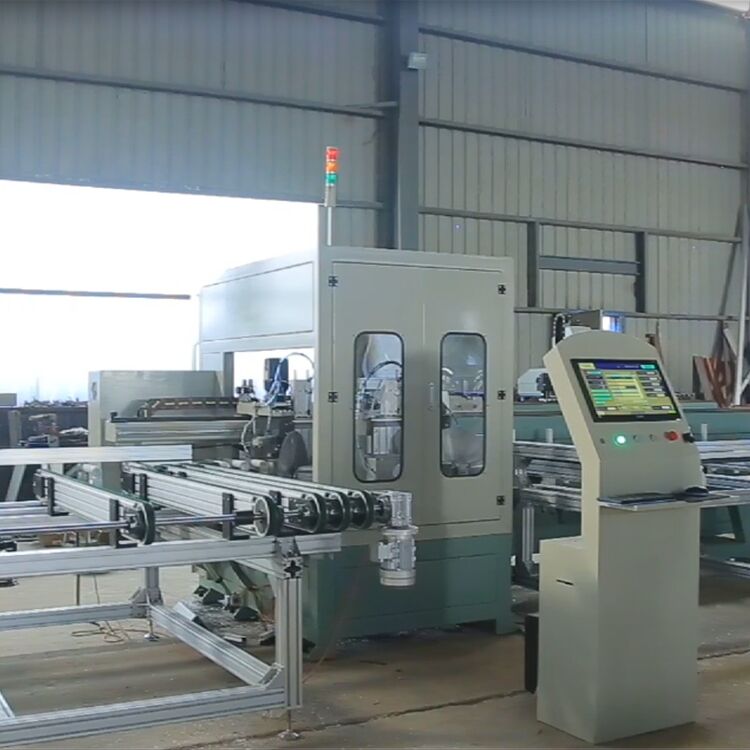
High-Resolution Optical Sensors for Reliable Glass Edge Defect Detection
Precision optical sensors form the frontline defense against glass edge flaws in automated IGU (Insulated Glass Unit) production. These systems identify microscopic imperfections that compromise structural integrity and thermal performance.
Line-scan cameras with sub-0.2 mm resolution for chip, corner break, and micro-crack identification
High-speed line-scan cameras capture continuous glass edge profiles at production line speeds exceeding 6 m/min. Their sub-0.2 mm spatial resolution reliably detects critical defects–including corner chips deeper than 0.3 mm, micro-cracks propagating at 15°–45° angles, and break patterns invisible to human inspectors.
HDR imaging to enhance contrast sensitivity for grinding marks, micro-inclusions, and edge haze
HDR imaging helps overcome problems with reflections and inconsistent lighting conditions by merging several different exposures together, which gives about 120 dB of dynamic range overall. The technology actually picks up on really small surface issues that might otherwise go unnoticed. We're talking things like tiny grinding marks measuring around 5 micrometers deep, those pesky silicone bits stuck between glass and sealant materials, plus that annoying chemical residue left behind after cleaning processes. Combine HDR with line scan data though, and manufacturers can spot defective products right away before they get laminated. This early detection cuts down on wasted time and money spent fixing mistakes later on. Some factories report savings of roughly 30 something percent when it comes to rework costs in their large scale IGU production lines.
PLC-Synchronized Machine Vision Systems for In-Line Glass Edge Defect Detection
Real-time integration post-washer: trigger synchronization, conveyor speed tolerance (±0.3 m/s), and latency constraints
Putting machine vision right after the glass washing process needs tight coordination with the PLC system if we want to keep things moving at the required pace. The trigger systems have to handle those ups and downs in conveyor speed, which can vary around plus or minus 0.3 meters per second, all while keeping response times under 100 milliseconds so the inspection doesn't slow down the whole operation. We've found that using encoders for position tracking works really well, along with these smart exposure adjustments that adapt as the glass surfaces change their reflective properties. According to some recent tests from 2023 on automated IGU lines, this approach cuts down on missed defects by about 34 percent when compared to older systems without proper synchronization. Makes sense why manufacturers are making the switch these days.
AI-powered semantic segmentation trained on 12K annotated edge defect images–98.2% precision in crack localization
Deep learning models that have been trained using around 12 thousand expert annotated images of edge defects can reach nearly 98 percent accuracy when it comes to finding those tiny micro cracks down to the pixel level. These systems are really good at telling the difference between serious problems like chips larger than half a millimeter and normal edge variations, getting almost everything right with about 99% recall rates. What makes this possible is how they look at things like how light bends around surfaces, shadow patterns from microscopic fractures, and small shape differences in different layers of images. At production speeds where materials move past inspection points at 30 meters per minute, these advanced systems spot cracks smaller than tenth of a millimeter much better than older methods based purely on rules. Testing shows they perform roughly 40% better in real world IGU quality checks compared to what was available before.
Multi-Modal Sensor Fusion to Quantify Glass Edge Defect Severity
Structured light profilometry + machine vision: non-contact depth measurement (>50 µm) and angular deviation analysis
When structured light profilometry works together with machine vision systems, it can measure chip and micro-crack depths that go well past 50 microns while also spotting angular deviations down to just fractions of a degree. The combination gives engineers a complete picture of surface damage severity along with important stress points in materials. This allows for consistent defect evaluation that meets IGU's strict structural and thermal requirements. By linking depth measurements with angle changes across all surfaces, manufacturers get full circle assessments of defects at processing speeds exceeding 15 meters per minute. Compared to regular optical inspection methods alone, this approach reduces false alarms by around 40%, making quality control much more reliable in production environments.
Balancing Detection Accuracy and Throughput in High-Speed IGU Production
When it comes to making insulated glass units automatically, getting good at spotting defects along glass edges is all about finding the sweet spot between being accurate and keeping things moving fast enough. The problem with high res inspection systems? They eat up computer power real quick, which creates delays that really slow down production once those conveyor belts hit over 1.2 meters per second. Smart manufacturers now rely on edge computing setups that can check each unit for flaws in less than 10 milliseconds flat out beating what mechanical reject systems can do. These systems spread the workload across multiple processing points so they maintain better than 99 percent accuracy rates while still keeping production lines humming along. Getting this right depends heavily on adjusting how sensitive sensors are set relative to how fast the whole assembly line moves around them, because nobody wants their quality checks turning into another bottleneck instead of helping improve overall output.
FAQ
Q: What is the importance of high-resolution optical sensors in IGU production?
A: High-resolution optical sensors are crucial in IGU production because they help detect microscopic imperfections that could affect structural integrity and thermal performance.
Q: How does HDR imaging contribute to glass edge defect detection?
A: HDR imaging enhances contrast sensitivity by merging different exposures, allowing detection of small surface issues that might be missed otherwise.
Q: What advantage does PLC-synchronized machine vision provide in glass defect detection?
A: PLC-synchronized machine vision systems offer real-time integration, handling conveyor speed variations and minimizing inspection latency for more precise defect detection.
Q: How effective is AI-powered semantic segmentation in detecting glass edge defects?
A: AI-powered semantic segmentation achieves up to 98.2% precision in crack localization, significantly improving detection rates compared to traditional methods.
Q: What role does multi-modal sensor fusion play in evaluating glass edge defect severity?
A: Multi-modal sensor fusion, combining structured light profilometry and machine vision, facilitates accurate non-contact depth measurement and angular deviation analysis for comprehensive defect evaluation.