 EN
EN

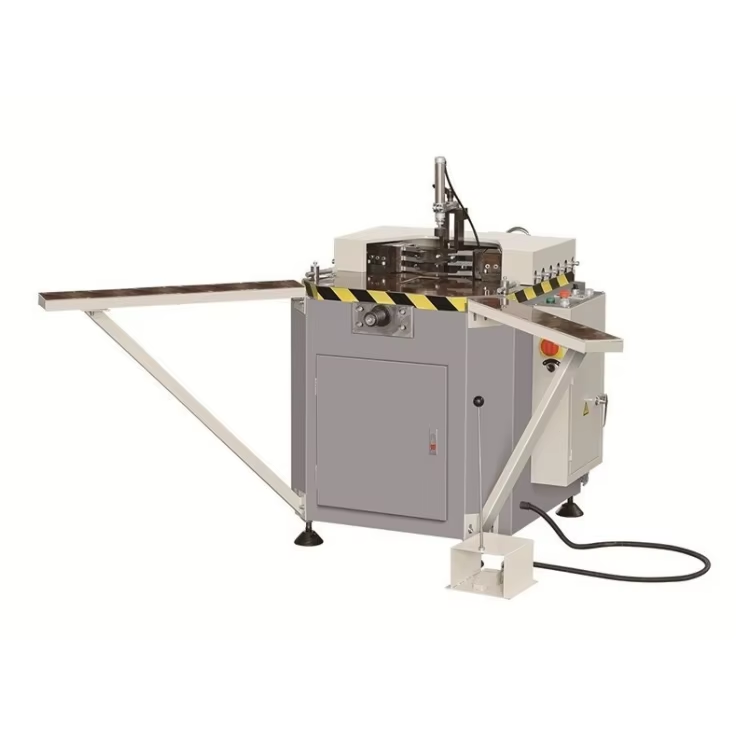
Servo-Electric Drive Precision Control for Aluminium Bending
Closed-loop feedback: Real-time position and torque correction for sub-millimeter accuracy
Servo electric drives bring remarkable accuracy to aluminum bending thanks to their closed loop control systems that keep track of position and torque adjustments on the fly. The rotary encoders provide high frequency feedback capable of spotting tiny deviations down to 0.01 mm while the metal is being bent. This allows the system to make around 500 micro corrections every second against issues like material spring back and changes caused by heat. Such real time adjustments basically wipe out those pesky cumulative errors that plague traditional methods, resulting in consistently accurate bends within fractions of a millimeter across entire production batches. What's really important here is how this responsiveness maintains even wall thickness when working with complicated profile shapes something absolutely essential for architectural projects where any misalignment at visible joints just won't cut it.
Tight tolerance achievement (±0.05 mm) via high-resolution encoders and servo motor responsiveness
Today's servo electric bending machines can hold tight tolerances around plus or minus 0.05 mm thanks to how their components work together. These machines feature linear encoders that measure down to 0.001 mm accuracy, paired with servo motors responding within just 2 milliseconds. For 6000 series aluminum extrusions specifically, the system actually adjusts both ram speed and applied force during the bending process itself when it detects irregularities in the material. Unlike older hydraulic systems which often introduced errors of about 0.15 mm due to fluid compliance problems, modern direct drive electromechanical setups eliminate these issues entirely. The end result? Manufacturers now routinely achieve ISO 2768 fine grade tolerances straight off the machine without needing any additional finishing work. This has led to significant savings across the board, with some plants reporting as much as a 22 percent drop in scrap materials when running large production batches.
Mechanical Advantages of Servo-Electric Drive in Bending Axes
Elimination of hydraulic backlash through direct-drive electromechanical transmission
Old school hydraulic systems have issues with fluid compression and play in their valves and pistons, which leads to position drifting when working with aluminium bends. Servo electric drives fix these problems by using direct electrical connections instead of hydraulic parts. The motors attach straight to ball screws without any middle components. What happens then is pretty cool the system keeps consistent torque throughout, so whatever position command gets sent immediately moves the ram where it needs to go. We're talking about really precise movements here around 0.005 mm accuracy. That kind of repeatability just cant be achieved with traditional hydraulics. For making high quality aerospace aluminium parts, this matters a lot because even small tolerances can stack up and cause big problems during assembly.
Consistent angular repeatability across aluminium profile geometries and thicknesses
Servo electric systems can maintain around half a degree bend angle consistency even when working with different profile types. Think about going from those delicate thin wall extrusions right up to heavy duty structural sections. The system relies on high resolution encoders that constantly send position updates back to the servo controllers. These controllers then tweak the torque as needed to handle material springback issues and deal with any shape inconsistencies during bending. This kind of closed loop control makes sure the force stays consistent across all those tricky asymmetrical profiles. No more worrying about those annoying angular deviations that happen so often with hydraulic machines when they process mixed batches of materials. And let's not forget the bottom line benefits either. With this level of repeatability, manufacturers typically see about a 20-25% drop in scrap rates during mass production runs. Plus it allows smooth switching between various aluminum alloys without having to recalibrate everything every time there's a changeover.
CNC-Synchronized Multi-Axis Control for End-to-End Bending Precision
When it comes to bending precision, servo-electric drives get a major boost from CNC synchronized multi axis control. These systems handle movement along the Y axis (the ram), X axis (back gauge), plus all those rotational axes at once. No more stopping and starting manually between operations, which means we can create complex multi plane bends in aluminum profiles with incredible dimensional consistency down to sub millimeter levels. Modern machines run programmed sequences using real time positional feedback, so they hit bend angles within about 0.1 degree repeat after repeat across whole production batches. This kind of accuracy matters a lot for parts used in aircraft where geometry specs are extremely tight. Another advantage? Direct drive electromechanical transmission stops those pesky cumulative errors from building up over time. Even when working with materials of different thicknesses, these systems maintain their accuracy throughout the entire process. Manufacturers report cutting setup times by around 40 percent while still making sure each and every bend falls right within specifications from first touch to last release point.
Energy Efficiency and Dynamic Response Without Compromising Servo Electric Drive Bending Precision
Intelligent power modulation: Maintaining force fidelity while reducing thermal drift and energy use
Servo electric bending systems get their precision from how they modulate electromechanical power to match exactly what's needed for each forming task. According to industry reports, these systems can cut energy consumption by as much as 80 percent compared to traditional hydraulic ones since they only run the motor when actual bending is happening. This approach cuts down on temperature changes that usually mess with dimensional stability when working with aluminum. At the same time, those powerful servo motors keep force levels extremely consistent at the micrometer level. Research shows this works out to around plus or minus 0.05 mm repeatability even when dealing with different material thicknesses. Plus, because of the way electromechanical systems work, there's less heat buildup over time which means calibration stays stable longer. So manufacturers don't have to worry about losing angular accuracy just because production speeds are cranked up.
FAQs
How do servo-electric drives improve the precision of aluminium bending?
Servo-electric drives enhance precision in aluminium bending through their closed-loop feedback systems, which track and adjust position and torque in real-time. This ensures sub-millimeter accuracy, eliminating cumulative errors common in traditional methods.
What are the benefits of using servo-electric drives over hydraulic systems?
Servo-electric drives offer superior accuracy and energy efficiency compared to hydraulic systems. They eliminate hydraulic fluid compliance issues, reduce energy consumption, and provide consistent torque and position control, leading to tighter tolerances and lower scrap rates.
How does CNC-synchronized multi-axis control enhance bending precision?
CNC-synchronized multi-axis control allows for the simultaneous handling of multiple movement axes, ensuring consistent and precise bends. It reduces manual stop-and-starts, maintains dimensional consistency, and minimizes cumulative errors across production batches.
Why is energy efficiency important in servo-electric drive systems?
Energy efficiency is crucial as it reduces operational costs and minimizes thermal drift that can affect dimensional stability. Servo-electric systems only utilize energy when bending occurs, cutting energy use significantly compared to traditional hydraulic systems.